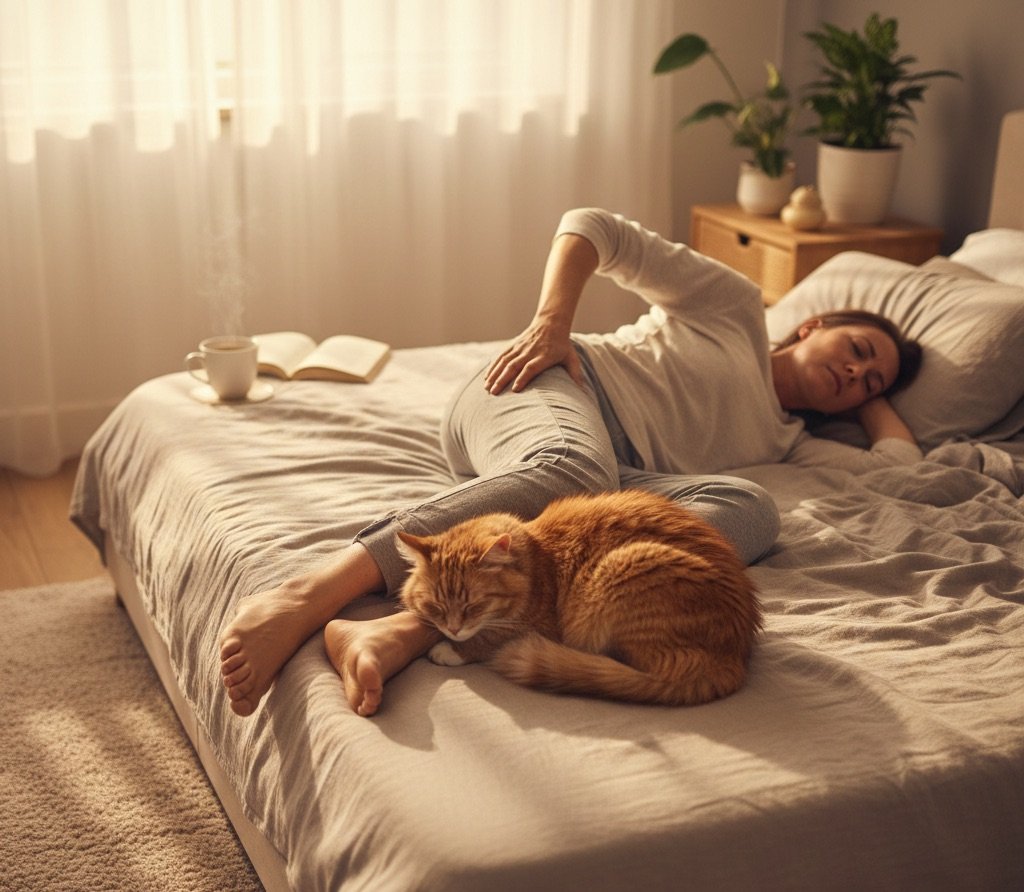
Living with POTS is already challenging, but when osteoarthritis enters the picture—especially in the shoulders—the combination can make pain, stiffness, and positional discomfort feel dramatically worse. Many people notice that standing still, lying in one position too long, or even shifting after sleep triggers sharp pain or deep stiffness. While POTS does not cause osteoarthritis, it can absolutely intensify the pain you feel, especially during stillness or positional changes.
This comprehensive guide explores how these two conditions interact, why symptoms feel amplified, and what’s happening inside the body when pain spikes during standing, sleeping, or inactivity.
How POTS and Osteoarthritis Interact in the Body



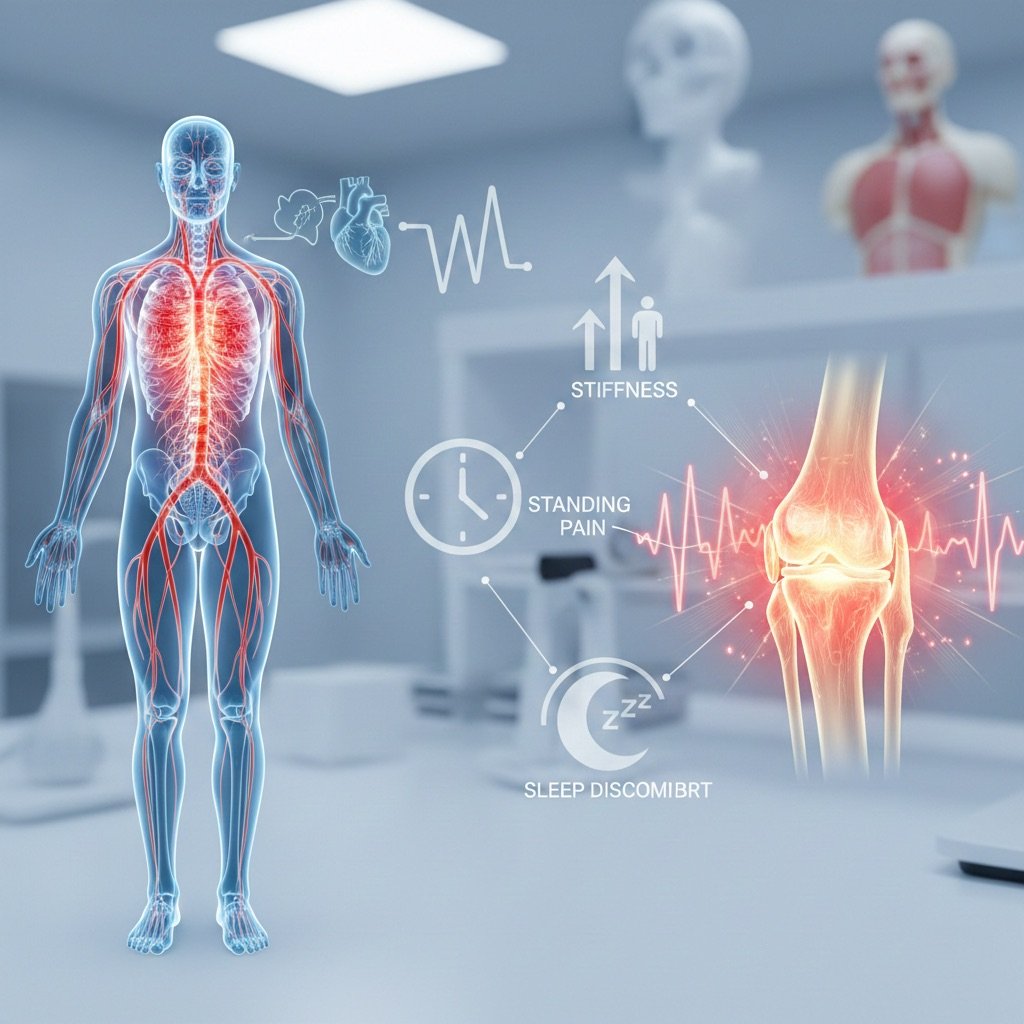
POTS affects the autonomic nervous system, circulation, and blood flow. Osteoarthritis affects the joints, cartilage, and surrounding tissues. When these two conditions overlap, the result is a body that becomes stiff quickly, hurts more intensely, and reacts strongly to changes in position.
Do you use compression garments daily?
POTS and Circulation: Why Pain Feels Worse
People with POTS often experience:
- Reduced blood flow to muscles and joints
- Blood pooling in the legs when standing
- Increased muscle fatigue
- Heightened pain sensitivity
- Orthostatic intolerance
When circulation slows or becomes inefficient, muscles and joints don’t receive the oxygen and nutrients they need. This can make any existing pain condition feel more severe, including osteoarthritis.
Osteoarthritis and Inactivity: The “Gelling” Effect
Osteoarthritis naturally causes:
- Stiffness after rest
- Pain when first moving a joint
- Reduced range of motion
- Aching or grinding sensations
This stiffness after inactivity is sometimes called the gelling phenomenon, and it becomes more pronounced when the joint is inflamed or worn.
When Both Conditions Combine
The overlap creates a perfect storm:
- POTS reduces circulation → muscles stiffen faster
- Osteoarthritis stiffens joints after rest → movement becomes painful
- Standing still worsens blood pooling → pain increases
- Repositioning after sleep becomes difficult → joints feel locked or frozen
This is why many people feel like their body “seizes up” or “locks” after staying still.
Why Standing Still Causes More Pain
Standing still is one of the hardest positions for people with POTS. The body struggles to maintain blood pressure and circulation, which leads to:
- Muscle fatigue
- Heaviness in the limbs
- Increased joint discomfort
- Worsening stiffness
When osteoarthritis is present, the lack of movement also means:
- Joints aren’t lubricated
- Cartilage doesn’t receive nutrients
- Pain signals increase
This combination makes standing still feel painful, exhausting, and unsustainable.
Why Sleeping Without Turning Causes Severe Stiffness
Many people with POTS and osteoarthritis wake up feeling:
- Stiff
- Sore
- Locked up
- Unable to move easily
- Painful when repositioning
What Happens During Sleep
During sleep:
- Blood pressure drops
- Circulation slows
- Muscles relax
- Joints remain in one position for hours
For someone with osteoarthritis, this leads to:
- Joint stiffness
- Inflammation
- Pain when first moving
For someone with POTS, this leads to:
- Poor circulation
- Muscle soreness
- Difficulty transitioning from lying to sitting or standing
Together, they create intense discomfort when you first move after being still.


How POTS Amplifies Pain Signals
POTS affects the autonomic nervous system, which also influences:
- Pain perception
- Muscle tension
- Inflammation responses
This means your body may interpret normal sensations as more painful than they would be otherwise. When osteoarthritis is present, the pain signals are already elevated, and POTS can heighten them even further.
Common Symptoms When POTS and Osteoarthritis Overlap
People often report:
- Pain when standing still
- Stiffness after sitting or lying down
- Shoulder pain when repositioning
- Difficulty turning over in bed
- Morning stiffness that takes time to ease
- Muscles that fatigue quickly
- Joints that feel unstable or inflamed
These symptoms are not imagined—they are consistent with how both conditions behave.
Daily Strategies That May Help Reduce Discomfort
While everyone’s body is different, many people find relief through simple adjustments.
Gentle Movement Throughout the Day
Small, frequent movements help:
- Improve circulation
- Lubricate joints
- Reduce stiffness
Hydration and Electrolytes
Supporting blood volume can help reduce:
- Muscle pain
- Fatigue
- Orthostatic symptoms
Heat or Warm Showers
Warmth can ease:
- Joint stiffness
- Muscle tension
- Morning discomfort
Supportive Sleep Positioning
Using pillows to support the shoulders and spine may reduce:
- Nighttime pain
- Morning stiffness
Avoiding Long Periods of Stillness
Even small movements like shoulder rolls or shifting position can help prevent the “locking up” sensation.

GnarlyTree | CONNECTED CONDITIONS
Small Fiber Neuropathy and POTS | Understanding the Connection
Small Fiber Neuropathy (SFN) is emerging as a critical piece of the puzzle for many people living with Postural Orthostatic Tachycardia Syndrome (POTS). While POTS is often discussed in relation to Ehlers-Danlos Syndrome (EDS), SFN...
Frequently Asked Questions
Does POTS directly cause osteoarthritis?
No, POTS does not cause osteoarthritis, but it can make the pain and stiffness from osteoarthritis feel more intense.
Why does standing still hurt so much with POTS?
Standing still reduces circulation and increases blood pooling, which leads to muscle fatigue and amplified joint discomfort.
Why do I feel so stiff after sleeping?
Both POTS and osteoarthritis contribute to stiffness after inactivity due to reduced circulation and joint immobility.
Can POTS make joint pain worse even if the arthritis is mild?
Yes, POTS can heighten pain sensitivity and muscle fatigue, making mild arthritis feel more severe.
Why does repositioning hurt so much?
Joints stiffen during stillness from osteoarthritis, and POTS reduces circulation, making the first movement after rest painful.
Is this combination of symptoms normal for people with POTS and arthritis?
Yes, many people experience increased stiffness, pain, and difficulty with positional changes when both conditions are present.
Final Thoughts
POTS does not cause osteoarthritis, but it can absolutely intensify the pain, stiffness, and discomfort associated with it—especially during standing, sleeping, or long periods of stillness. The combination of reduced circulation, joint inflammation, and heightened pain sensitivity creates a unique challenge that many people face daily. Understanding how these conditions interact can help you make sense of your symptoms and take steps toward managing them more comfortably.
Do you use a walker or other mobility aid for independence?