Table of Contents
Many people eventually discover that structured, gradual exercise programs can play a meaningful role in improving daily stability. Two of the most well‑known approaches are the CHOP POTS Exercise Program and the Levine Protocol, both designed to help retrain the autonomic nervous system through carefully paced conditioning.
This article explores how these programs work, why they’re used, and what people with POTS often consider when deciding whether a structured exercise plan is right for them.
Understanding Why Exercise Programs Exist for POTS



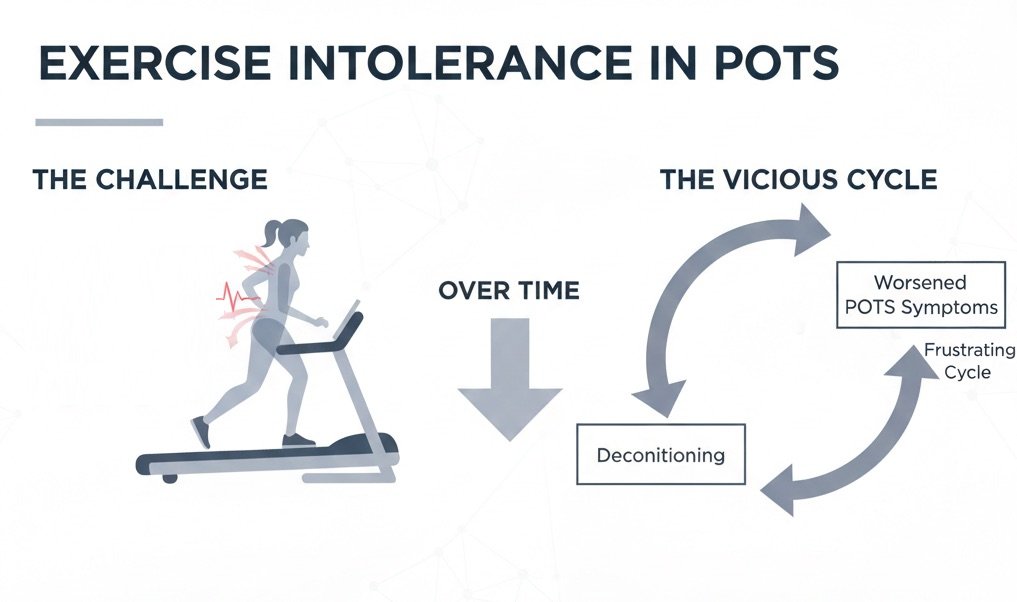
Exercise intolerance is one of the most common challenges in POTS. Even simple activities can trigger symptoms because the body struggles to regulate blood flow, heart rate, and vascular tone. Over time, this can lead to deconditioning, which then worsens symptoms in a frustrating cycle.
Structured programs like CHOP and Levine aim to break that cycle by:
- Building cardiovascular strength gradually
- Improving blood volume regulation
- Strengthening the lower body to support circulation
- Reducing orthostatic stress through recumbent and semi‑recumbent training
- Supporting long‑term autonomic stability
These programs are not quick fixes, and they’re not one‑size‑fits‑all. But many people find that slow, consistent conditioning helps them regain function and confidence.
The CHOP POTS Exercise Program
The CHOP (Children’s Hospital of Philadelphia) POTS Exercise Program is one of the most widely referenced structured plans for teens and adults with POTS. It focuses on gentle progression, predictable pacing, and accessible equipment.
What Makes CHOP Unique
- Designed specifically for people with POTS
- Emphasizes recumbent exercise early on
- Uses a clear week‑by‑week structure
- Includes strength training alongside cardio
- Prioritizes symptom‑aware pacing
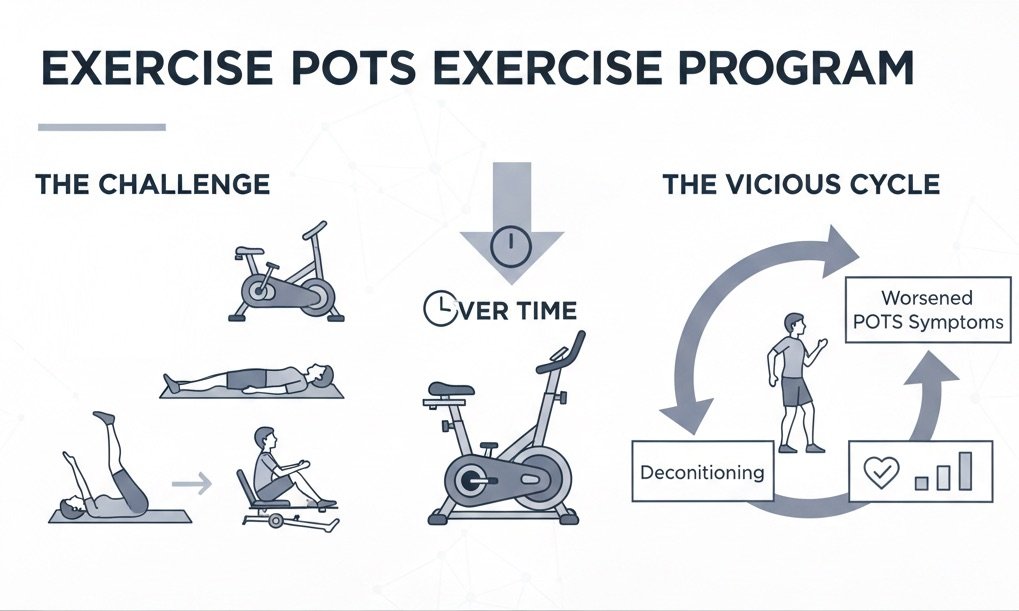
The CHOP program typically begins with activities that minimize upright stress, such as:
- Recumbent biking
- Rowing
- Swimming or water walking
- Seated strength exercises
As conditioning improves, the program gradually introduces upright activity, but only after the body has built a stronger foundation.
Why Many People with POTS Like the CHOP Approach
- It feels approachable and realistic
- It avoids pushing too hard too soon
- It’s easy to adapt for home use
- It supports consistency without overwhelming the nervous system
The CHOP program is often recommended for people who need a gentle, structured starting point that respects the limits of autonomic dysfunction.
The Levine Protocol
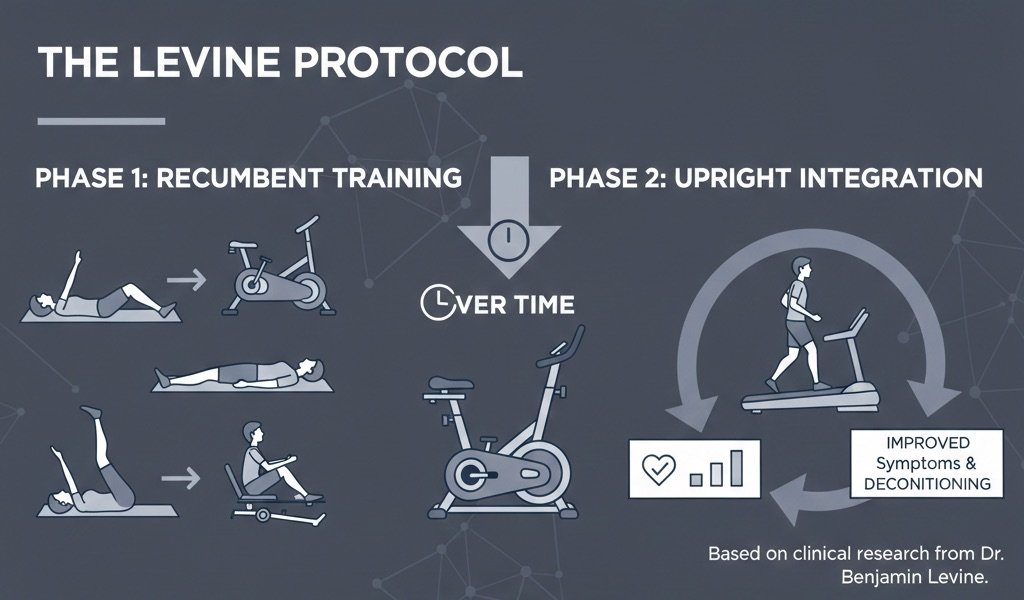
The Levine Protocol, developed by Dr. Benjamin Levine, is another well‑known structured exercise plan for POTS. It is more intensive than CHOP and is often used by people who are ready for a longer, more demanding program.
What Defines the Levine Protocol
- A multi‑month, progressive conditioning plan
- Heavy emphasis on recumbent cardio early on
- Gradual transition to upright exercise
- Focus on improving stroke volume and cardiovascular efficiency
- Structured strength training to support circulation
The Levine Protocol is known for its detailed progression and long‑term commitment. Many people follow it for several months, slowly increasing duration and intensity as tolerated.
Why Some People Choose Levine
- It offers a clear, long‑term roadmap
- It’s designed to improve cardiovascular capacity
- It provides structure for people who thrive on routine
- It supports measurable progress over time
Because it is more demanding, some people prefer to start with CHOP and transition to Levine later, once their baseline stability improves.
CHOP vs. Levine: How They Compare
Both programs share the same core philosophy: start low, go slow, and build a foundation before adding upright activity. But they differ in intensity, pacing, and structure.
Key Differences
- CHOP is gentler and more accessible for beginners
- Levine is longer, more intensive, and more structured
- CHOP is often used for teens and adults who need a softer entry point
- Levine is often chosen by those ready for a more demanding progression
Key Similarities
- Both emphasize recumbent exercise early on
- Both use gradual progression
- Both include strength training
- Both aim to improve autonomic stability and exercise tolerance
Neither program is “better” universally—what matters is matching the plan to the individual’s current capacity and symptoms.
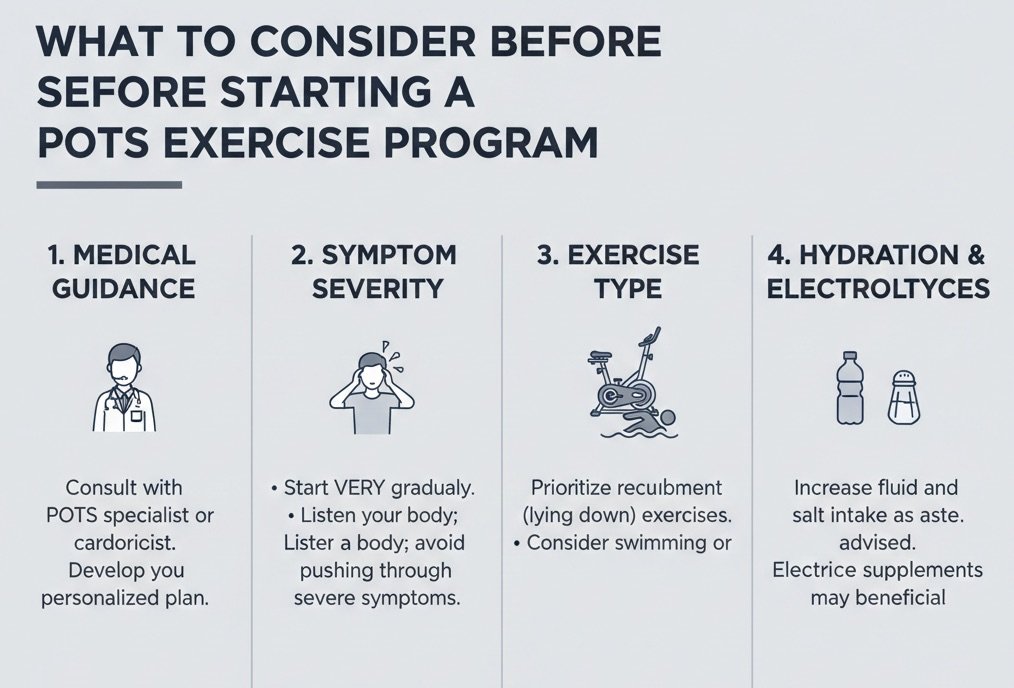
What to Consider Before Starting a POTS Exercise Program
People with POTS often think about several factors before beginning a structured plan:
- Current symptom stability
- Ability to tolerate recumbent exercise
- Access to equipment like a recumbent bike or rowing machine
- Daily energy levels and pacing needs
- Personal comfort with structured routines
- Whether they prefer a gentle or more intensive approach
Many people also incorporate supportive strategies such as hydration, electrolytes, compression garments, and salt intake as part of their overall routine.
How These Programs Support Autonomic Regulation
Both CHOP and Levine are built around the idea that the autonomic nervous system can adapt over time. Consistent, low‑stress conditioning may help:
- Improve blood flow
- Increase circulating blood volume
- Strengthen the heart’s ability to pump efficiently
- Reduce exaggerated heart rate responses
- Support better tolerance for standing and daily activity
This is why recumbent exercise is so central early on—it allows cardiovascular training without overwhelming the system.

 GnarlyTree | DIAGNOSTIC TESTS & CARE
Seeking Help for POTS | A Patient’s Guide to Talking with Providers
Guidance on preparing for appointments, describing symptoms clearly, and advocating for effective POTS care.
Frequently Asked Questions
What makes CHOP and Levine different from regular exercise?
They are designed specifically for people with POTS, using recumbent and gradual progression to reduce symptom flare‑ups.
Do these programs cure POTS?
They don’t cure POTS, but many people find they improve stability, stamina, and daily function over time.
How long does it take to see improvement?
Some people notice changes within weeks, while others take months; progress varies widely.
Can you combine parts of CHOP and Levine?
Many people adapt elements from both programs, choosing what fits their current capacity and pacing needs.
Do you need special equipment?
Most people use a recumbent bike, rowing machine, or pool early on, but adaptations are possible.
Are these programs safe for everyone with POTS?
People often tailor them to their own tolerance, and many choose to consult a clinician before beginning.
Final Thoughts
Structured exercise programs like the CHOP POTS Exercise Program and the Levine Protocol offer a clear, gradual path for rebuilding strength and improving daily stability. They respect the unique challenges of autonomic dysfunction and provide a framework that many people find empowering. Whether someone starts with the gentler CHOP approach or the more intensive Levine progression, the goal is the same: steady, sustainable conditioning that supports long‑term well‑being.
How often do you incorporate exercise into your routine?