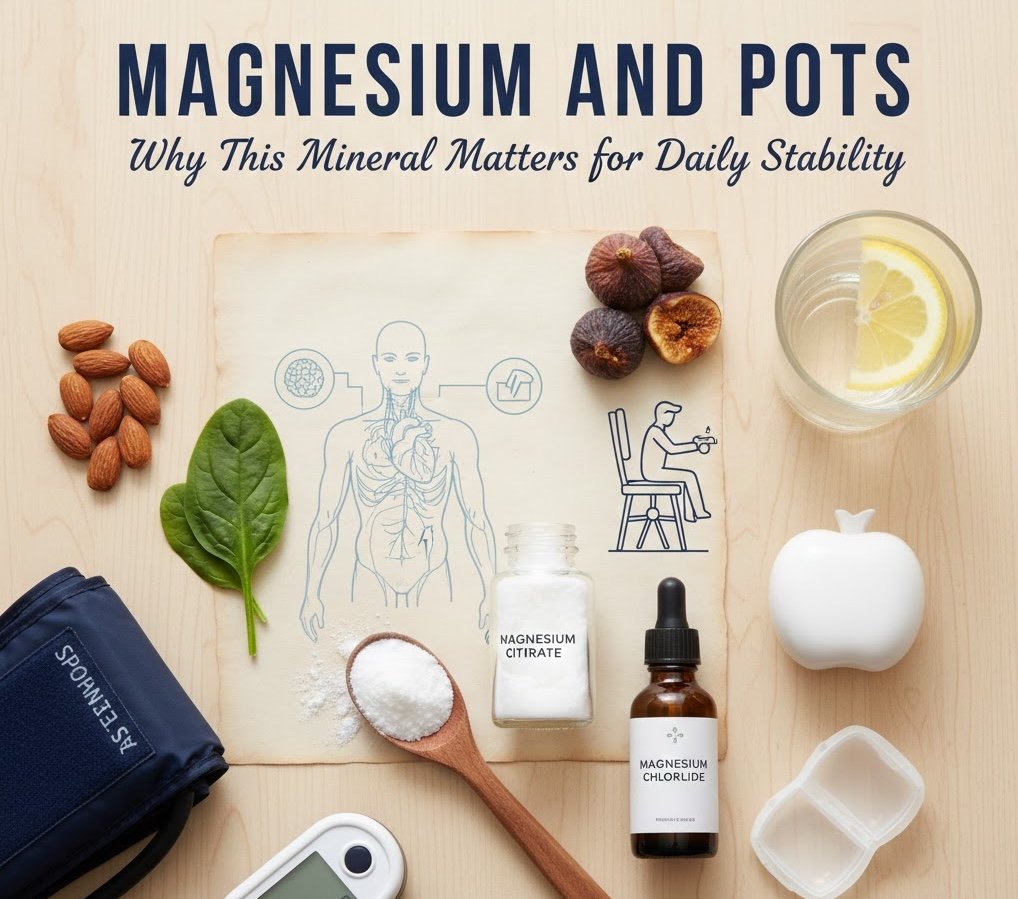
Living with POTS often means navigating a daily landscape of dizziness, fatigue, rapid heart rate, and unpredictable energy levels. Many people explore lifestyle tools, hydration strategies, and supportive nutrients to help create more stability in their routines. Among the most commonly discussed minerals in the POTS community is magnesium—a nutrient involved in hundreds of processes throughout the body, including muscle function, nerve signaling, and hydration balance.
This guide explores why magnesium is frequently part of POTS‑friendly wellness routines, which forms people often consider, and how to choose a type that fits your daily life. This is general educational information, not medical advice, and is meant to help you understand the landscape so you can make informed decisions.
Understanding Magnesium’s Role in the Body
Magnesium is an essential mineral that supports muscle relaxation, nerve communication, electrolyte balance, and overall steadiness. It plays a role in how the body manages stress, sleep quality, hydration, and energy production. Because POTS involves the autonomic nervous system—responsible for regulating heart rate, blood pressure, and circulation—many people naturally become curious about minerals that support these systems.
Do you have workplace accommodations for your POTS?
While magnesium is not a treatment for POTS, it is widely discussed in patient communities because of its connection to muscle tension, headaches, sleep, hydration, and general nervous‑system calm. Many people with POTS explore magnesium as part of their daily routine to support overall wellness and stability.
Why Magnesium Is Commonly Discussed in the POTS Community
People with POTS often talk about magnesium for several reasons:
- It supports muscle and nerve function
- It plays a role in hydration and electrolyte balance
- It is involved in stress response and relaxation
- It may support sleep quality
- It is easy to incorporate into daily routines
- Different forms feel different in the body
Because POTS symptoms can fluctuate with hydration, stress, sleep, and muscle tension, magnesium becomes a natural topic of interest for many people seeking more predictable daily rhythms.
What Magnesium Is Commonly Used For
Magnesium is often explored for general wellness purposes such as:
- Supporting muscle relaxation
- Encouraging a sense of calm
- Helping with everyday tension
- Supporting hydration routines
- Promoting restful sleep
- Supporting normal nerve function
These are broad, lifestyle‑oriented uses—not medical claims—and reflect how people commonly talk about magnesium in the context of POTS life.
Best Forms of Magnesium to Consider
Not all magnesium forms behave the same way. Some are gentler, some absorb more easily, and some have specific digestive effects. Here are the forms most commonly discussed:
Magnesium Glycinate



Magnesium glycinate is often chosen by people who want a gentle, easy‑to‑digest form of magnesium. It’s known for being kind to the stomach and is frequently used by those looking for a calming, steadying effect throughout the day. Many people prefer glycinate as part of their nighttime routine because it tends to feel soothing and supportive of overall relaxation.
Magnesium Citrate
Magnesium citrate is a well‑absorbed form that’s widely used for general wellness. It’s one of the most common types found on store shelves and is often selected by people who want a straightforward, reliable option. Citrate can have a loosening effect on digestion for some individuals, which is either a benefit or a drawback depending on personal needs.
Magnesium Oxide
Magnesium oxide is one of the most common and affordable forms available. It’s frequently included in multivitamins and combination supplements because it’s inexpensive and easy to manufacture. While it’s widely accessible, oxide is generally considered less absorbable than other forms, which is why many people explore alternatives if they’re looking for a more effective or gentle option.
Other Forms You May See
- Magnesium malate – often discussed for energy support
- Magnesium chloride – used in some topical products
- Magnesium threonate – discussed for cognitive support
Each form has its own feel, and many people experiment to see which one aligns best with their daily routine.
Does Brand Matter?
Magnesium is generally straightforward to manufacture, so many generic brands can be perfectly suitable. What tends to matter more than the brand name is:
- Clear labeling of the magnesium form
- Third‑party testing (USP, NSF, ConsumerLab)
- Avoiding unnecessary fillers
- Transparent sourcing
- Consistent dosage
People often choose brands that clearly state the type of magnesium and provide quality assurance.
Capsule vs Powder vs Liquid: Which Is Best?
Different formats offer different advantages depending on your preferences and routine.
Capsules
- Easy to take
- Gentle on the stomach
- Consistent dosing
- Great for travel or simple routines
Powders
- Flexible dosing
- Easy to mix into water or electrolyte drinks
- Helpful for people who dislike swallowing pills
Liquids
- Fast‑absorbing
- Simple for those who prefer not to take capsules
- Easy to adjust serving size
Most people choose based on convenience, digestion, and how magnesium fits into their daily habits.
Combo vs Separate: Should Magnesium Stand Alone?
Magnesium is often taken as a standalone supplement, especially when someone wants to control the form and amount. Combination products—like multivitamins or electrolyte mixes—may include magnesium, but usually in smaller amounts or less absorbable forms.
Standalone magnesium offers:
- More control over the form
- More predictable digestion
- Clearer understanding of how it feels in your routine
Combination products can still be useful, but they may not provide the same flexibility.
General Considerations When Exploring Magnesium
When people with POTS explore magnesium as part of their wellness routine, they often consider:
- How their body responds to different forms
- Whether they prefer a gentle, slow‑release option
- How magnesium fits into their hydration habits
- Whether they want a morning or nighttime routine
- How it pairs with other supplements they already take
- Whether they prefer capsules, powders, or liquids
Magnesium is one of the most commonly discussed minerals in the POTS community because it plays a broad role in muscle and nerve function, and because different forms can feel noticeably different.

 GnarlyTree | PERSONAL STORIES WITH POTS
EDS · Navigating Ehlers Danlos Syndrome and POTS Bad Days
The Unseen Battle of a "Bad Day" Navigating Ehlers-Danlos Syndrome and POTS bad days means experiencing a spectrum of physical sensations, and some days are undeniably worse than others. While I’ve learned there's always a...
Frequently Asked Questions
What does magnesium do in the body?
Magnesium supports muscle function, nerve signaling, hydration balance, and overall steadiness, making it a commonly discussed mineral in wellness routines.
Is magnesium used to treat POTS?
Magnesium is not a treatment for POTS, but many people explore it as part of their general wellness and daily stability routines.
Which magnesium form is the gentlest?
Magnesium glycinate is often chosen for its gentle digestion and calming feel.
Does magnesium citrate cause loose stools?
Citrate can have a loosening effect for some people, which is why many choose it intentionally or avoid it depending on their needs.
Is magnesium oxide effective?
Magnesium oxide is common and inexpensive, though often less absorbable than other forms.
Can I take magnesium with electrolytes?
Many people combine magnesium with hydration routines, but the best approach depends on personal preference.
Is powder or capsule magnesium better?
Both work well; powders offer flexible dosing, while capsules offer convenience.
Do I need a specific brand?
Brand matters less than quality testing, clear labeling, and choosing the right form.
Can magnesium support sleep?
Many people use magnesium as part of their nighttime routine because of its calming properties.
Should magnesium be taken alone or in a combo supplement?
Standalone magnesium offers more control over the form and amount, while combos are convenient but less customizable.
Final Thoughts
Magnesium is one of the most widely discussed minerals in the POTS community because of its role in muscle function, nerve communication, hydration balance, and overall daily steadiness. While it’s not a treatment for POTS, many people explore different forms of magnesium to support their wellness routines and create more predictable daily rhythms. Understanding the differences between forms—citrate, glycinate, oxide, and others—can help you choose an option that fits your lifestyle, preferences, and goals.
What is your biggest challenge with managing POTS at work?