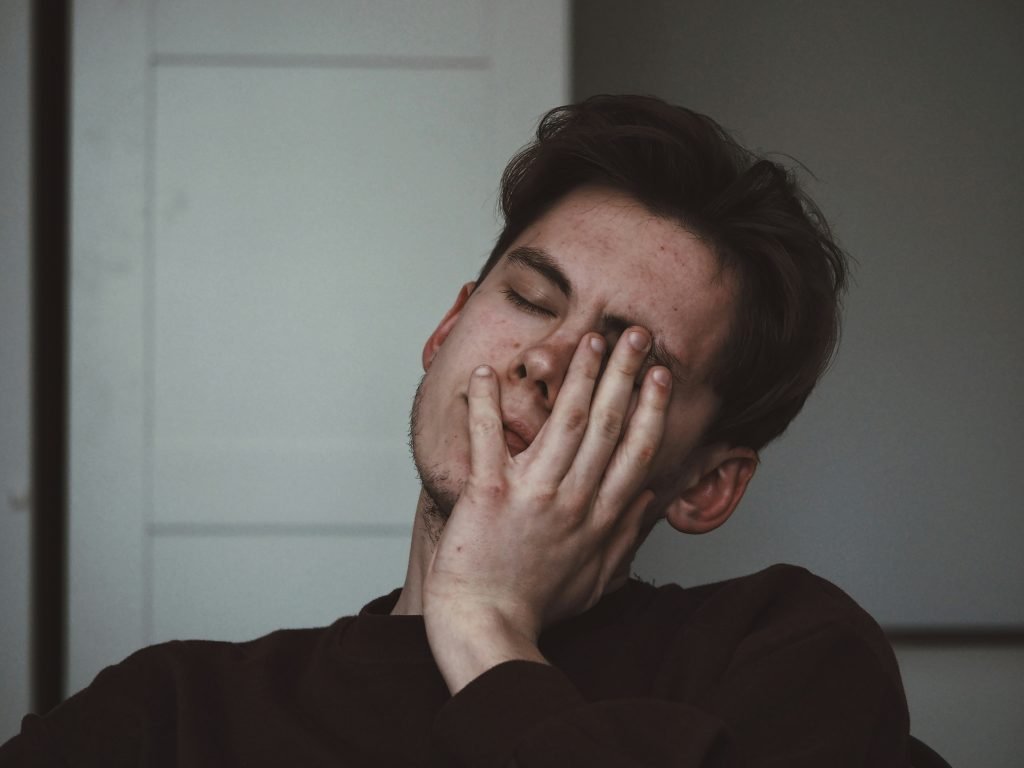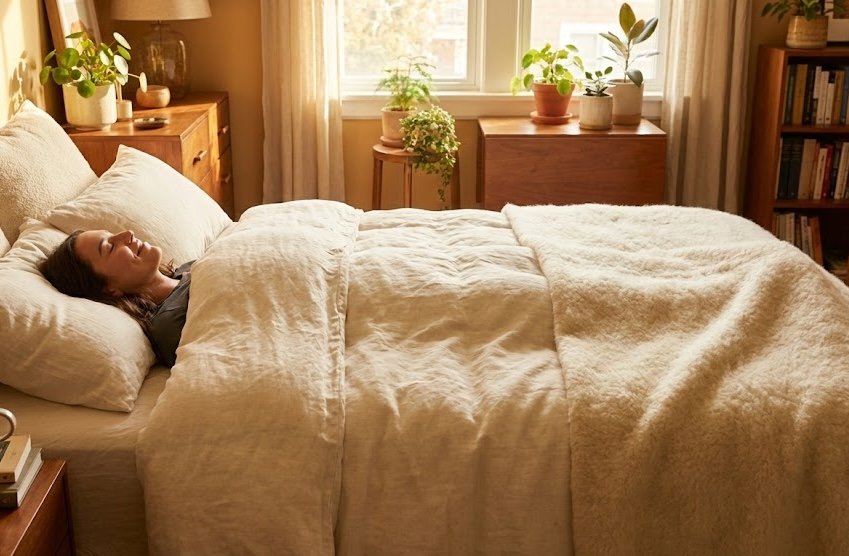
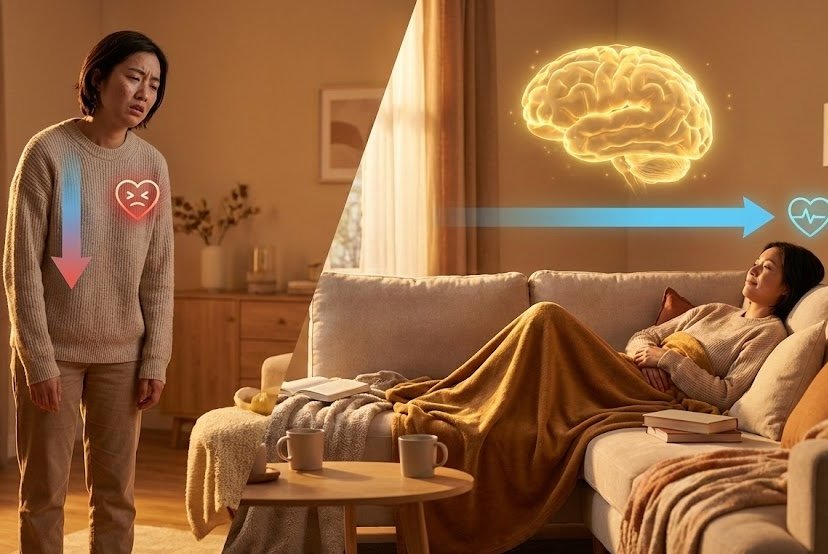
For people living with POTS, one truth becomes obvious very quickly: horizontal is heaven. Sometimes, a lot of times, it feels like absolute bliss the moment you lie down. Symptoms ease, thinking becomes clearer, and your body feels like it finally stops fighting itself. This isn’t laziness, weakness, or avoidance—it’s physiology.
This article explores why lying flat brings relief, how gravity affects circulation in POTS, and what the science of orthostatic intolerance reveals about the body’s relationship with posture.
Understanding Why Gravity Hits Harder for People With POTS


Gravity affects everyone, but for people with POTS, it becomes a daily adversary. When a healthy person stands up, the autonomic nervous system quickly adjusts blood flow, heart rate, and vascular tone to keep blood circulating efficiently.
Which diagnostic test was most helpful for your diagnosis?
In POTS, these adjustments don’t happen smoothly. Instead, the body struggles to maintain stable circulation, leading to symptoms such as:
- Lightheadedness
- Rapid heart rate
- Fatigue
- Weakness
- Brain fog
- Shakiness
- Visual disturbances
The moment the body becomes upright, gravity pulls blood downward, and the autonomic system cannot compensate effectively. This is why lying down feels like instant relief—because it removes the gravitational challenge.
The Science Behind “Horizontal Is Heaven”
Gravity and Blood Pooling
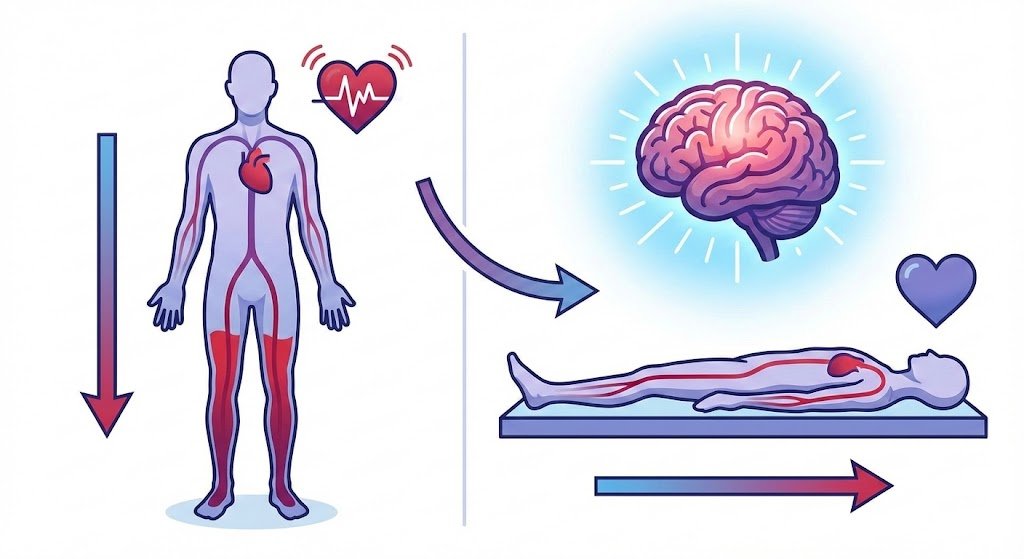
When you stand, gravity pulls blood into the lower body. Most people counteract this with:
- Tightening of blood vessels
- Increased heart rate
- Activation of the autonomic nervous system
In POTS, these mechanisms are impaired or delayed. Blood pools in the legs and abdomen, reducing the amount returning to the heart. This leads to:
- Reduced blood flow to the brain
- Increased heart rate as the body tries to compensate
- Symptoms of orthostatic intolerance
Lying down redistributes blood evenly, improving circulation and reducing the need for the heart to work overtime.
The Autonomic Nervous System and Upright Stress
The autonomic nervous system regulates involuntary functions like heart rate, blood pressure, and temperature. In POTS, this system becomes overwhelmed when the body is upright.
Horizontal positioning reduces autonomic demand, allowing the system to stabilize.
Why Sitting Helps—But Lying Down Helps Even More
Sitting can absolutely feel better for many people with POTS, especially compared to standing. It reduces some of the gravitational pull on the body and gives the autonomic system a partial break. But even though sitting offers relief, it doesn’t fully remove the challenges that come with being upright.
When you sit:
- Your torso is still vertical
- Gravity still pulls blood into the abdomen and legs
- Your heart and autonomic system still have to work to keep circulation stable
So while sitting may feel manageable for a while, shifting from sitting to lying down often brings a noticeable wave of relief. Horizontal positioning removes the remaining gravitational load, redistributes blood more evenly, and allows the body to settle into a state that feels calmer, clearer, and more stable.
That’s why many people with POTS can feel “okay” sitting—but feel significantly better the moment they lie flat.
Why Brain Fog Improves When You Lie Down
Cognitive symptoms—often called “brain fog”—are common in POTS. These symptoms improve when lying down because:
- Blood flow to the brain increases
- Oxygen delivery stabilizes
- The autonomic system stops overcompensating
- The heart no longer races to maintain circulation
This is why many people with POTS feel mentally sharper when reclined.
The Role of Blood Volume and Circulation
Many people with POTS have lower circulating blood volume or difficulty maintaining vascular tone. When upright, this reduced volume makes it even harder for the body to push blood upward against gravity.
Horizontal positioning:
- Increases venous return
- Improves cardiac output
- Reduces tachycardia
- Stabilizes blood pressure
This is why lying down feels like the body finally “resets.”
Why Horizontal Rest Is Not Laziness—It’s Physiology
People with POTS often face stigma or misunderstanding. They may be told they’re “resting too much,” “not trying hard enough,” or “just tired.” But the need to lie down is not a choice—it’s a physiological response to orthostatic stress.
Horizontal rest:
- Reduces symptoms
- Prevents fainting
- Conserves energy
- Allows the autonomic system to recover
- Supports cognitive clarity
It is a necessary part of managing a condition that is deeply affected by posture and gravity.
How Gravity Shapes Daily Life With POTS
Standing Still Is Harder Than Walking
Standing in place is one of the most difficult positions for people with POTS because:
- Muscles aren’t contracting to help pump blood
- Blood pools rapidly
- Symptoms escalate quickly
Walking, while still challenging, engages the leg muscles and helps circulation.
Heat Makes Gravity Worse
Heat causes blood vessels to dilate, making it even harder for the body to push blood upward. This is why hot showers, summer weather, and warm rooms can intensify symptoms.
Mornings Are the Hardest
After lying down all night, the body must suddenly adjust to upright posture. Many people with POTS experience their worst symptoms in the morning because:
- Blood volume shifts
- The autonomic system is sluggish
- Circulation must rapidly adapt
This is another example of how gravity and posture shape daily functioning.
What Happens to POTS Symptoms in Space or Zero Gravity?
There are no formal studies on how people with POTS feel in true zero‑gravity environments, but we can make reasonable observations based on what is known about circulation, orthostatic stress, and how astronauts respond to microgravity.
In space, the body experiences no gravitational pull on blood flow, which means:
- Blood no longer pools in the legs
- The heart doesn’t need to fight gravity
- Circulation becomes more evenly distributed
- Orthostatic stress essentially disappears
Interestingly, astronauts often develop temporary POTS‑like symptoms when they return to Earth because their bodies become deconditioned to gravity. This suggests that a person with POTS might feel significantly better in zero gravity, at least in terms of orthostatic intolerance.
However, microgravity also causes:
- Reduced blood volume
- Muscle deconditioning
- Changes in autonomic regulation
These are the same challenges POTS patients already face on Earth. So while zero gravity might relieve symptoms in the moment, long‑term microgravity could theoretically worsen the underlying physiology that contributes to POTS.
In short:
Zero gravity would likely feel amazing temporarily — but it wouldn’t fix the underlying autonomic issues.
Does Higher or Lower Elevation Affect POTS Symptoms?
Elevation changes can influence how a person with POTS feels, but the effects vary widely. The main factors at play are oxygen levels, air pressure, and hydration demands.
Higher Elevation
At higher altitudes, the air contains less oxygen. This can lead to:
- Faster heart rate
- Increased breathing effort
- Dehydration
- Fatigue
For someone with POTS, these changes may amplify symptoms like tachycardia, dizziness, or weakness. Some people report feeling significantly worse at high elevation, especially during the first few days.
Lower Elevation
Lower elevations — especially near sea level — often feel easier because:
- Oxygen levels are higher
- The heart doesn’t need to work as hard
- Hydration is easier to maintain
Many people with POTS report feeling more stable at lower elevations, though this varies from person to person.
The Bottom Line
Elevation doesn’t cause or cure POTS, but it can influence symptom intensity. The body’s response depends on individual physiology, hydration status, and how sensitive someone is to oxygen and pressure changes.
How Being Underwater Affects POTS Symptoms
Water changes everything — literally. When the body is submerged, hydrostatic pressure pushes blood from the limbs toward the chest, mimicking some of the benefits of lying down.
Underwater pressure can:
- Improve venous return
- Reduce blood pooling
- Support circulation
- Lower heart rate
- Reduce orthostatic stress
This is why many people with POTS feel noticeably better in a pool or during water‑based exercise. The water essentially acts like a full‑body compression garment.
Warm vs. Cool Water
- Cooler water often feels stabilizing because it reduces vasodilation.
- Hot water can worsen symptoms by dilating blood vessels and increasing heart rate.
This is why hot tubs and hot showers are notoriously difficult for many people with POTS.
Movement Underwater
Water also supports the body’s weight, making exercise more accessible. Many people find they can move more freely and with less fatigue in a pool than on land.
Take-Away
Underwater environments often mimic the benefits of lying down while adding gentle compression and support. For many people with POTS, water is one of the most comfortable and symptom‑friendly environments.

 GnarlyTree | DIAGNOSTIC TESTS & CARE
Top US POTS Clinics and Specialists | Where to Find Expert Care
Fortunately, across the United States, a growing number of specialized clinics and experts are offering comprehensive support for those with autonomic dysfunction. This guide explores the top POTS clinics in the USA, what makes them...
Frequently Asked Questions
Why does lying down help POTS symptoms so quickly?
Lying down redistributes blood evenly and reduces the need for the autonomic system to fight gravity.
Why does my heart rate drop when I lie flat?
The heart no longer needs to compensate for reduced blood flow to the brain, so it stabilizes.
Why is standing still so difficult with POTS?
Standing still allows blood to pool without muscle movement to help push it upward.
Why do I feel mentally clearer when horizontal?
Improved blood flow to the brain reduces cognitive symptoms like brain fog.
Is it normal to need to lie down multiple times a day?
Many people with POTS rely on horizontal rest to manage symptoms and prevent worsening.
Why does sitting not help as much as lying down?
Sitting still places the torso upright, allowing blood to pool in the abdomen.
Does gravity affect everyone with POTS the same way?
Symptoms vary, but most people with POTS experience some degree of orthostatic intolerance.
Why are mornings harder for people with POTS?
The body must rapidly adjust from lying down to upright posture, which stresses circulation.
Does lying down cure POTS symptoms?
It doesn’t cure them, but it temporarily reduces the gravitational stress that triggers symptoms.
Final Thoughts
For people with POTS, “horizontal is heaven” is not an exaggeration—it is a lived reality grounded in physiology. Gravity places unique demands on the autonomic nervous system, and when that system is dysregulated, upright posture becomes a daily challenge. Lying down restores balance, improves circulation, and gives the body a break from the constant battle against orthostatic stress.
Understanding the science behind this experience helps validate what patients already know: relief is not imagined, exaggerated, or optional. It is the body responding to gravity in the only way it can.