Unveiling the Unseen: Your Personal POTS Journey
Share Your POTS Story with others. Living with a chronic illness often feels like navigating a labyrinth with invisible walls. For those battling Postural Orthostatic Tachycardia Syndrome, or POTS, this analogy rings particularly true. It’s a condition that, while impacting millions worldwide, remains largely misunderstood by the general public and, at times, even by parts of the medical community. The symptoms can be debilitating, unpredictable, and isolating, making daily life an ongoing challenge. But amidst the struggles, there’s immense strength, resilience, and a powerful narrative waiting to be shared: your POTS journey.
We believe that every story holds invaluable insights, not only for those who are newly diagnosed and seeking guidance, but also for researchers, healthcare providers, and the wider community striving for greater dysautonomia awareness. Your unique experiences, from the first subtle signs to the daily reality of living with POTS, can illuminate paths for others, foster understanding, and contribute to a more compassionate world. This blog post is an invitation, a call to action for you to share your voice and become a beacon of hope and knowledge. We want to hear the intricacies of your experience, the highs and lows, the triumphs and the trials.
The Elusive Path to a POTS Diagnosis
One of the most common threads weaving through the narratives of individuals with POTS is the challenging and often prolonged journey to receiving an accurate POTS diagnosis. For many, it’s not a straightforward path but rather a winding road filled with misdiagnoses, skepticism, and countless medical appointments. Symptoms such as persistent dizziness, extreme fatigue, brain fog, palpitations, and gastrointestinal issues are often dismissed or attributed to other, less complex conditions. Patients frequently report feeling invalidated, told their symptoms are “all in their head,” or wrongly diagnosed with anxiety or panic disorders.
Have you found L-carnitine helpful for your POTS?
This diagnostic odyssey can span years, leaving individuals frustrated, exhausted, and without the proper tools to manage their burgeoning POTS symptoms. Imagine experiencing a heart rate that skyrockets upon standing, debilitating fatigue that makes simple tasks feel monumental, or a brain fog so thick it’s hard to hold a coherent conversation – all while being told there’s nothing physically wrong. It’s a testament to the resilience of the POTS community that so many persevere through this period of uncertainty. When a diagnosis finally arrives, it can bring a mix of emotions: relief at having a name for their suffering, validation for their experiences, and sometimes, a daunting realization of the long road ahead. Sharing the details of your diagnostic path can be incredibly helpful for others still searching for answers, offering them hope and specific avenues to explore.
Navigating the Daily Realities of Living with POTS
Once a diagnosis is made, the real work of living with POTS begins. This involves learning to manage a complex array of POTS symptoms that can fluctuate dramatically from day to day, or even hour to hour. Simple activities like standing up, walking across a room, or even taking a shower can become significant challenges. The invisible nature of the illness often leads to misunderstandings from friends, family, and colleagues, making social and professional life particularly difficult. Individuals may have to adapt their careers, reduce their work hours, or even stop working entirely. Social engagements can become overwhelming due to fatigue, pain, or the fear of a symptom flare-up.
But managing POTS isn’t just about coping with the physical. The mental and emotional toll can be substantial. The constant uncertainty, the grief over lost abilities, and the struggle to maintain a semblance of “normalcy” can lead to anxiety, depression, and feelings of isolation. Yet, within this struggle, many find innovative ways to adapt. From strategic hydration and salt intake to compression garments, mobility aids, and specific exercise protocols, the POTS community has developed a wealth of practical strategies. What specific daily challenges do you face? What adaptations have you made to maintain your quality of life? Your insights into the practicalities of living with POTS are invaluable to those seeking real-world solutions.
The Power of Community and POTS Support
No one should have to face the challenges of POTS alone. The importance of a strong POTS support system cannot be overstated. This support can come from various sources: understanding family members who adapt routines, empathetic friends who listen without judgment, or, crucially, online communities and local support groups where shared experiences foster a sense of belonging and understanding. Connecting with others who truly “get it” can be a lifeline, offering emotional solace, practical advice, and a feeling of validation that is often missing from other areas of life.
Within these communities, individuals exchange information about promising treatments, effective coping mechanisms, and even just simple words of encouragement on a bad day. The collective knowledge and empathy found in these networks are often more impactful than any single medical consultation. Have you found solace or practical help in a support group? What role has community played in your POTS journey? Sharing your experiences with POTS support can encourage others to seek out and build their own vital networks. It reinforces the idea that even with a challenging invisible illness, you are never truly alone.
Cultivating Hope and Resilience in Your Journey
Despite the significant hurdles, the POTS journey is also one of remarkable resilience, adaptation, and hope. Many individuals with POTS discover inner strengths they never knew they possessed. They learn to listen intently to their bodies, advocate fiercely for their health, and find new passions and purposes that align with their physical capabilities. Coping mechanisms evolve from merely surviving to actively thriving within the constraints of their condition. This might involve embracing mindfulness, pursuing creative outlets, or finding joy in smaller, more manageable activities.
Every step forward, no matter how small, is a victory. From a successful attempt at a new exercise regimen to finding a medication that alleviates some symptoms, these moments contribute to a narrative of perseverance. What keeps you going on your most challenging days? What small victories have you celebrated? Your stories of cultivating hope and finding resilience can be a powerful source of inspiration for others who might feel overwhelmed or discouraged by their own circumstances. They demonstrate that while life with POTS is different, it can still be rich, meaningful, and full of moments of joy.
Why Your Story Matters: Advancing Dysautonomia Awareness
Each personal narrative about living with POTS is a vital piece of a larger puzzle. By sharing your story, you’re not just recounting your experiences; you’re actively contributing to dysautonomia awareness. Every shared detail, every described symptom, and every challenge overcome helps to:
- Educate Others: Many people, including some medical professionals, lack a comprehensive understanding of POTS. Your detailed account helps to fill this knowledge gap.
- Empower Patients: Newly diagnosed individuals often feel lost and overwhelmed. Reading about others’ experiences can provide guidance, validation, and a sense of “I’m not alone.”
- Drive Research: Patient narratives can highlight specific areas of unmet need, guiding researchers towards more effective treatments and deeper understanding of the condition’s mechanisms.
- Foster Empathy: Personal stories humanize the illness, moving it beyond a list of clinical symptoms and helping friends, family, and employers better understand the daily struggles.
- Reduce Stigma: By speaking openly about POTS, you help to normalize the conversation around chronic illness and reduce the stigma often associated with invisible disabilities.
Your insights into symptoms, diagnostic processes, coping strategies, and support systems are invaluable. They collectively paint a more complete picture of what it truly means to live with this complex condition.
🎙️ Share Your Voice: Participate in Our Interview
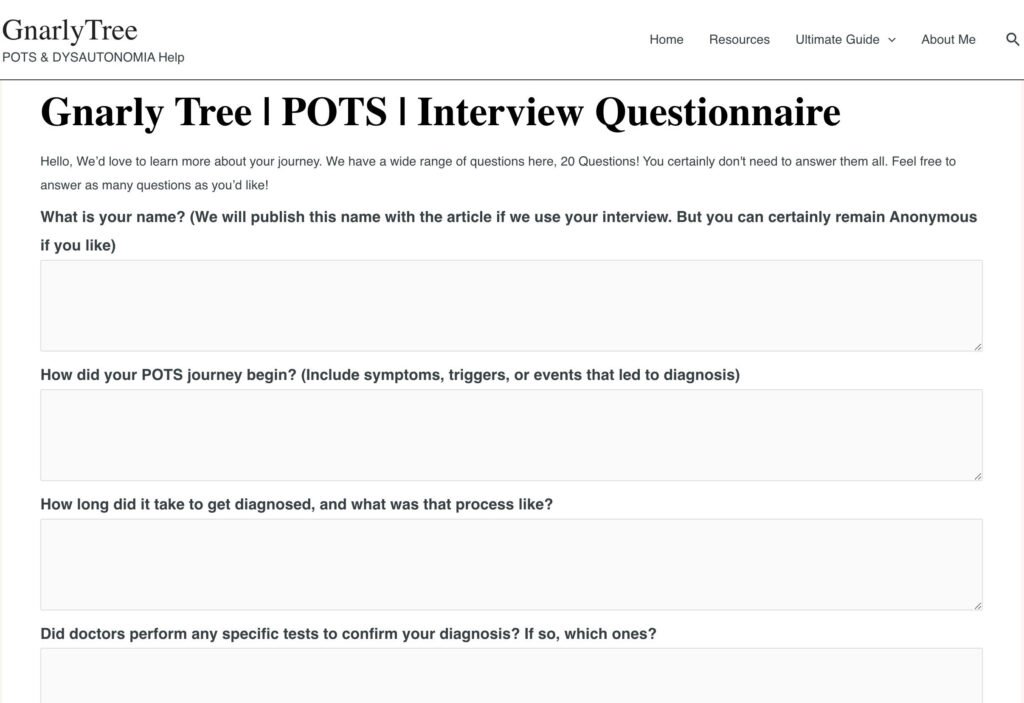
Password = potsinterview
We invite you to contribute your unique POTS journey to our growing collection of stories. Your experiences are important, and by sharing them, you can help illuminate the path for countless others and significantly advance dysautonomia awareness.
Our interview questionnaire covers a comprehensive range of topics, from your initial symptoms and diagnosis to daily life, treatments, and personal insights. It’s designed to capture the richness and complexity of your individual experience. You don’t have to answer every question; simply share what you’re comfortable with.
Ready to share your story? Visit our dedicated Interview Page and answer the questions. Your contribution will be a powerful testament to the resilience of the POTS community.
Final Thoughts: A Collective Journey Towards Understanding
The POTS journey is deeply personal, yet it is also a shared human experience. By coming together and openly discussing our lives with this condition, we build bridges of understanding, empathy, and collective strength. Every story shared chips away at the isolation and misunderstanding that often accompany chronic illness. Your narrative is more than just words on a page; it’s a living testament to your strength, a guide for others, and a crucial component in the ongoing effort to bring greater recognition and better care to the POTS community. Thank you for considering sharing your voice and helping to shape a future where living with POTS is met with more understanding and effective POTS support.
What is your biggest challenge with managing POTS at work?