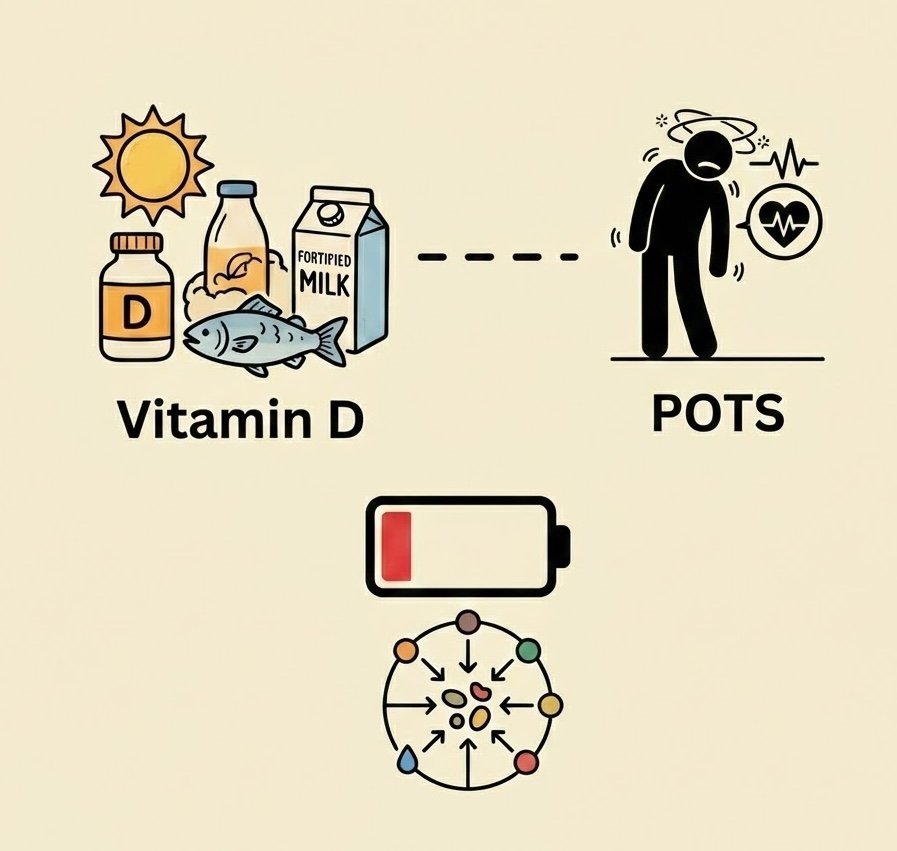
One nutrient that comes up again and again in POTS conversations is Vitamin D, an essential fat‑soluble vitamin that plays a role in bone health, immune function, muscle performance, and overall well‑being. Having POTS often means unpredictable energy levels, dizziness, fatigue, and a body that doesn’t always respond the way you expect. Many people explore supportive routines—hydration, electrolytes, gentle movement, and nutrient awareness—to create more stability in daily life.
This guide explores why Vitamin D is frequently discussed in the POTS community, why levels may run low, and what people commonly consider when choosing a supplement. This is general educational information, not medical advice, and is meant to help you understand the landscape so you can make informed decisions about your wellness routine.
Understanding Vitamin D’s Role in the Body
Vitamin D is often called the “sunshine vitamin” because the body can produce it when skin is exposed to sunlight. It supports bone strength, immune health, muscle function, and overall vitality. Because Vitamin D influences how the body manages energy, mood, and physical resilience, many people with chronic conditions naturally become curious about how it fits into their daily routine.
How often do you eat small meals to manage your symptoms?
While Vitamin D is not a treatment for POTS, it is widely discussed because of its connection to fatigue, muscle weakness, immune balance, and general wellness—areas that often overlap with the lived experience of POTS.
Why Vitamin D Is Often Low in People With Chronic Conditions
Vitamin D deficiency is common worldwide, and several factors can contribute to lower levels—especially for people managing chronic health challenges. Some of the most frequently discussed reasons include:
- Limited sunlight exposure due to indoor lifestyles, colder climates, or sensitivity to heat
- Reduced absorption related to digestive or nutritional challenges
- Higher nutrient demands during periods of stress or illness
- Seasonal changes, especially in northern regions
- Lifestyle patterns that make consistent sun exposure difficult
For many people with POTS, symptoms like fatigue, heat intolerance, or reduced mobility can naturally lead to spending more time indoors. Over time, this can contribute to lower Vitamin D levels, which is why the topic comes up so often in patient communities.
Why Vitamin D Is Commonly Discussed in the POTS Community
People with POTS often talk about Vitamin D for several reasons:
- It supports muscle function and physical steadiness
- It plays a role in immune health
- It influences energy and mood
- It is easy to supplement in small, consistent amounts
- It is commonly found to be low in the general population
Because POTS symptoms can overlap with fatigue, muscle weakness, and low energy, Vitamin D becomes a natural point of curiosity for many people seeking more predictable daily rhythms.
What Vitamin D Is Commonly Used For
Vitamin D is often explored for general wellness purposes such as:
- Supporting bone and muscle health
- Encouraging steady energy
- Supporting immune balance
- Helping maintain overall vitality
- Supporting mood and daily resilience
These are broad, lifestyle‑oriented uses—not medical claims—and reflect how people commonly talk about Vitamin D in the context of POTS life.
Best Forms of Vitamin D to Consider
Vitamin D supplements come in a few different forms, and understanding the differences can help you choose what fits your routine.
Vitamin D3 (Cholecalciferol)



Vitamin D3 is the most commonly used form and is often preferred because it mirrors the type of Vitamin D the body naturally produces from sunlight. It is widely available, easy to absorb, and typically found in softgels, capsules, and liquid drops.
Vitamin D2 (Ergocalciferol)
Vitamin D2 is plant‑based and often used in fortified foods. While it can still support Vitamin D levels, it is generally considered less efficient than D3 for maintaining long‑term balance.
Vitamin D3 with K2
Some people choose a combination of Vitamin D3 and Vitamin K2, especially when focusing on bone health. K2 is often included to support calcium regulation, though many people still take Vitamin D3 alone.
Does Brand Matter?
Vitamin D is relatively simple to manufacture, so many generic brands can be perfectly suitable. What tends to matter more is:
- Clear labeling of the form (D3 vs D2)
- Third‑party testing for purity
- Oil‑based delivery for better absorption
- Transparent sourcing
- Avoiding unnecessary additives
Softgels and liquid drops often provide the most consistent absorption because Vitamin D is fat‑soluble.
Capsule vs Liquid vs Softgel: Which Is Best?
Different formats offer different advantages depending on your preferences and routine.
Softgels
Softgels are one of the most popular forms because they are easy to swallow and typically contain oil, which helps with absorption. They are simple, consistent, and convenient for daily use.
Liquid Drops
Liquid Vitamin D is ideal for people who prefer not to swallow pills or want flexible dosing. Drops can be added to food or taken directly, making them a favorite for those who want a quick, easy routine.
Capsules
Capsules are another common option, though they may not always contain an oil base. Some people prefer them for simplicity or because they avoid gelatin.
Most people choose based on convenience, digestion, and how Vitamin D fits into their daily habits.
Combo vs Separate: Should Vitamin D Stand Alone?
Vitamin D is often taken as a standalone supplement, especially when someone wants to control the amount. Combination products—like multivitamins or D3/K2 blends—can be helpful, but they may not offer the same flexibility.
Standalone Vitamin D offers:
- More control over the dosage
- Clearer understanding of how it feels in your routine
- Flexibility to pair it with other supplements as needed
Combination products can still be useful, especially for people who prefer a simplified routine.
General Considerations When Exploring Vitamin D
When people with POTS explore Vitamin D as part of their wellness routine, they often consider:
- How much sunlight they get throughout the year
- Whether they prefer softgels, capsules, or liquid drops
- How Vitamin D fits into their morning or evening routine
- Whether they want a standalone supplement or a combination formula
- How it pairs with other nutrients they already take
Vitamin D is one of the most commonly discussed nutrients in the POTS community because it plays a broad role in energy, muscle function, and overall vitality.

 GnarlyTree | EXERCISE GUIDE
Treadmill Training for POTS | Safe Steps to Building Stamina
For POTS, treadmill exercise is often one of the most recommended strategies to retrain your autonomic nervous system, boost circulation, and improve overall quality of life.
Frequently Asked Questions
Why is Vitamin D often low in people with chronic conditions?
Limited sunlight, reduced absorption, and lifestyle factors can all contribute to lower Vitamin D levels.
Is Vitamin D used to treat POTS?
Vitamin D is not a treatment for POTS, but many people explore it as part of their general wellness routine.
Is Vitamin D3 better than D2?
Vitamin D3 is often preferred because it mirrors the form produced by sunlight and is typically easier to maintain in the body.
Are liquid drops or softgels better?
Both work well; softgels are convenient, while drops offer flexible dosing.
Can Vitamin D support energy?
Many people associate Vitamin D with overall vitality and daily steadiness.
Do I need a specific brand?
Brand matters less than quality testing, clear labeling, and choosing the right form.
Should Vitamin D be taken with food?
Vitamin D is fat‑soluble, so many people take it with a meal that contains healthy fats.
Can Vitamin D be combined with other supplements?
Yes, many people pair Vitamin D with other nutrients, though standalone options offer more control.
Is Vitamin D deficiency common?
Yes, Vitamin D deficiency is widespread and can affect people of all ages.
Does Vitamin D support immune health?
Vitamin D plays a role in immune function, which is why it’s often discussed in wellness routines.
Final Thoughts
Vitamin D is one of the most frequently discussed nutrients in the POTS community because of its role in energy, muscle function, immune balance, and overall vitality. While it’s not a treatment for POTS, many people explore Vitamin D as part of their daily wellness routine to support steadiness and resilience. Understanding the differences between forms—D3, D2, and combination formulas—can help you choose an option that fits your lifestyle and long‑term goals.
What is your understanding of your own POTS?