Table of Contents
Why a Pocket‑Sized POTS Journal Can Change Your Daily Stability
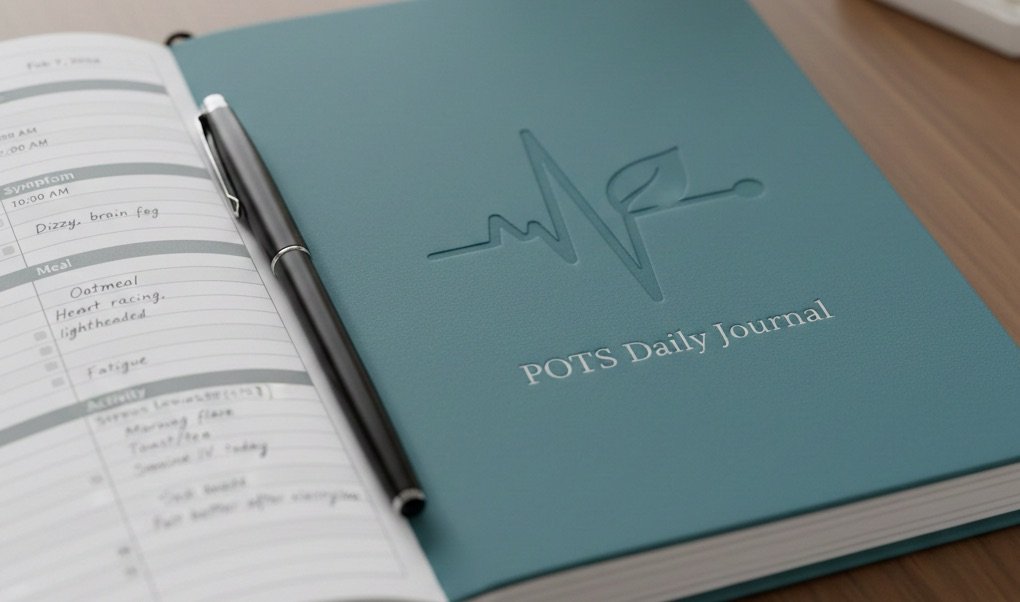
A pocket‑sized POTS journal gives you a simple, portable way to track patterns, identify triggers, and understand how your body responds to hydration, meals, posture, sleep, stress, and activity. Unlike digital apps, a small analog journal is always accessible, doesn’t drain your energy with screen glare, and becomes a reliable companion you can use anywhere.
Choosing the Right Pocket‑Sized Journal
The foundation of a good POTS journal is its size and portability. A journal that is too large becomes a burden; one that is too small becomes impractical. The sweet spot is a notebook no bigger than your mobile phone. This ensures it fits in your pocket, bag, or even stacks directly against your phone with a simple rubber band for a dual “always‑with‑me” setup.
Why Thin Is Better
A thick journal feels like a commitment. A thin one feels like a tool. Many people find it more sustainable to use weekly or monthly mini‑journals rather than a single bulky notebook. This keeps your system fresh, portable, and easy to maintain.

What to Look For
- Phone‑sized dimensions (around 3.5″ × 5.5″)
- Thin profile—avoid thick, heavy notebooks
- Soft cover for flexibility
- A built‑in pen loop or elastic holder
- Paper that works with any pen or pencil
Avoid journals that require proprietary pens or refills. You want something you can use with any pen or pencil you already own, so your system never breaks down because you ran out of a specialty ink cartridge.
Setting Up Your Journal Layout
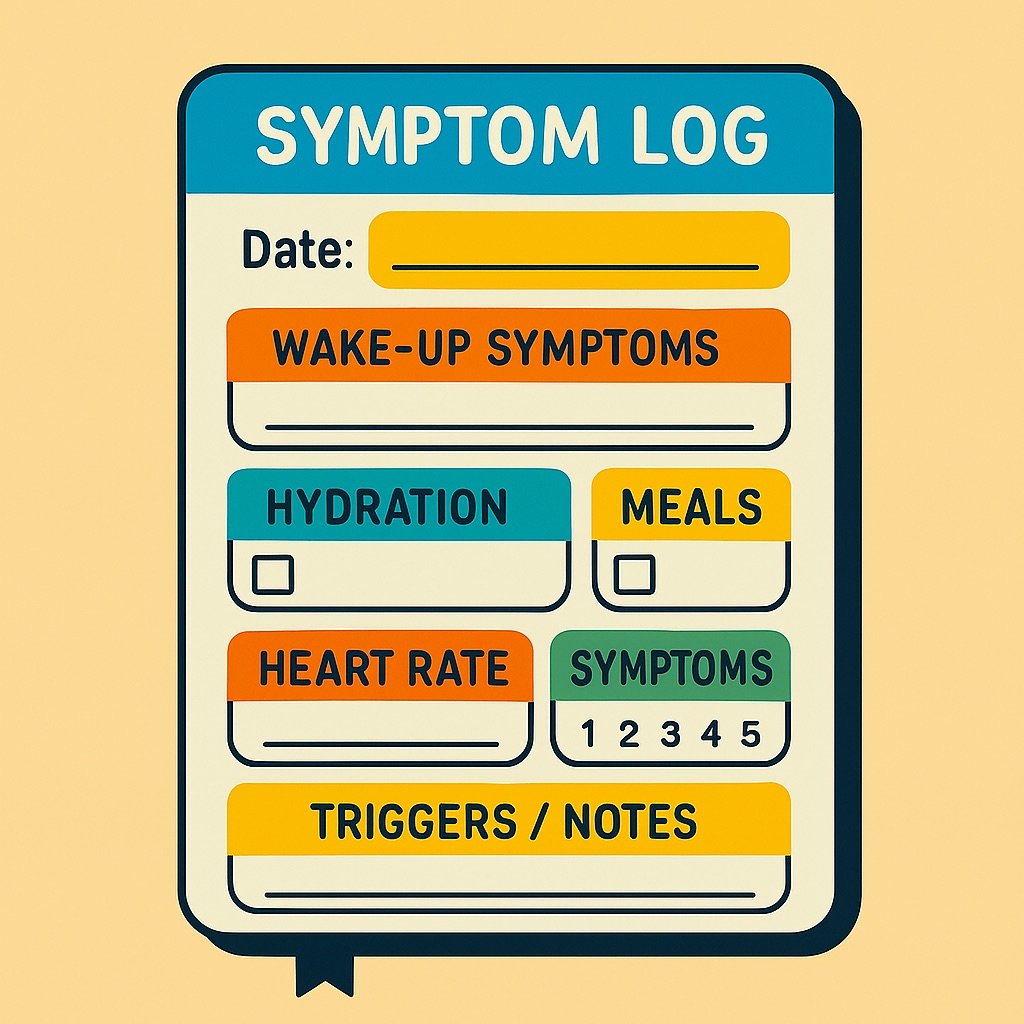
A pocket‑sized POTS journal works best when the layout is simple, repeatable, and fast. You don’t need elaborate spreads or artistic pages—just a structure that helps you capture the essentials without effort.
Daily Log Page
Each day gets one small page. Include:
- Date
- Wake‑up symptoms
- Hydration intake
- Meals and timing
- Heart rate notes (if you track them)
- Energy level
- Major symptoms
- Triggers or patterns noticed
- What helped
This gives you a snapshot of your day without overwhelming you.
Quick‑Check Boxes
To save time, add simple checkboxes for:
- Salt intake
- Electrolytes
- Compression garments
- Exercise or movement
- Rest periods
- Medications or supplements
These boxes make it easy to see patterns at a glance.
Symptom Scale
Create a tiny 1–5 scale for:
- Dizziness
- Fatigue
- Brain fog
- Heart rate discomfort
- Pain
- Nausea
This helps you track trends without writing long descriptions.
Using Your Journal Throughout the Day
A pocket‑sized POTS journal works because it’s always with you. The goal is not to write long entries—it’s to capture small pieces of information that add up to a clear picture.
Morning
Record:
- How you felt upon waking
- Any overnight symptoms
- First hydration or salt intake
- Morning heart rate changes
Mid‑Day
Note:
- Meals and timing
- Energy dips
- Standing or walking tolerance
- Environmental triggers (heat, stress, overstimulation)
Evening
Reflect on:
- What helped
- What made symptoms worse
- Any patterns you noticed
- Your overall stability for the day
This creates a full picture without requiring long writing sessions.
Pairing Your Journal With Your Phone
One of the most effective ways to keep your journal accessible is to pair it with your phone using a simple rubber band. This creates a dual tool you can grab anytime—your phone for quick reference and your journal for fast jotting.
Why This Works
- You always have your phone with you
- The journal becomes impossible to forget
- It encourages consistent tracking
- It keeps everything compact and portable
This simple trick turns your journal into a true “always‑with‑me” system.
Digitizing Your Entries for Long‑Term Use
Once a journal is filled, you don’t need to store stacks of notebooks. Instead, use your phone’s Scan Documents feature to digitize each page. This creates a searchable archive you can reference anytime.
Benefits of Digitizing
- Saves physical space
- Allows easy sharing with your care team
- Helps you track long‑term patterns
- Keeps your data organized and accessible
You can store your scans in folders labeled by month or symptom category.
What to Track in a Pocket‑Sized POTS Journal
Your journal should reflect your daily life with POTS. Here are the most helpful categories to include:
Hydration and Electrolytes
Note when you drink water, electrolytes, or salt‑rich beverages. Hydration is one of the biggest factors in symptom stability.
Meals and Blood Sugar Patterns
Record meal timing and how you feel afterward. Many people with POTS notice symptom changes after eating.
Heart Rate and Orthostatic Symptoms
You don’t need to track every number—just note when your heart rate feels high, unstable, or reactive.
Triggers and Environmental Factors
Heat, stress, overstimulation, and posture changes can all influence symptoms.
Rest and Recovery
Track when you lie down, nap, or take breaks. This helps you understand your body’s pacing needs.
Exercise or Movement
Record gentle movement, stretching, or structured exercise routines.
How a Pocket‑Sized POTS Journal Helps You See Patterns
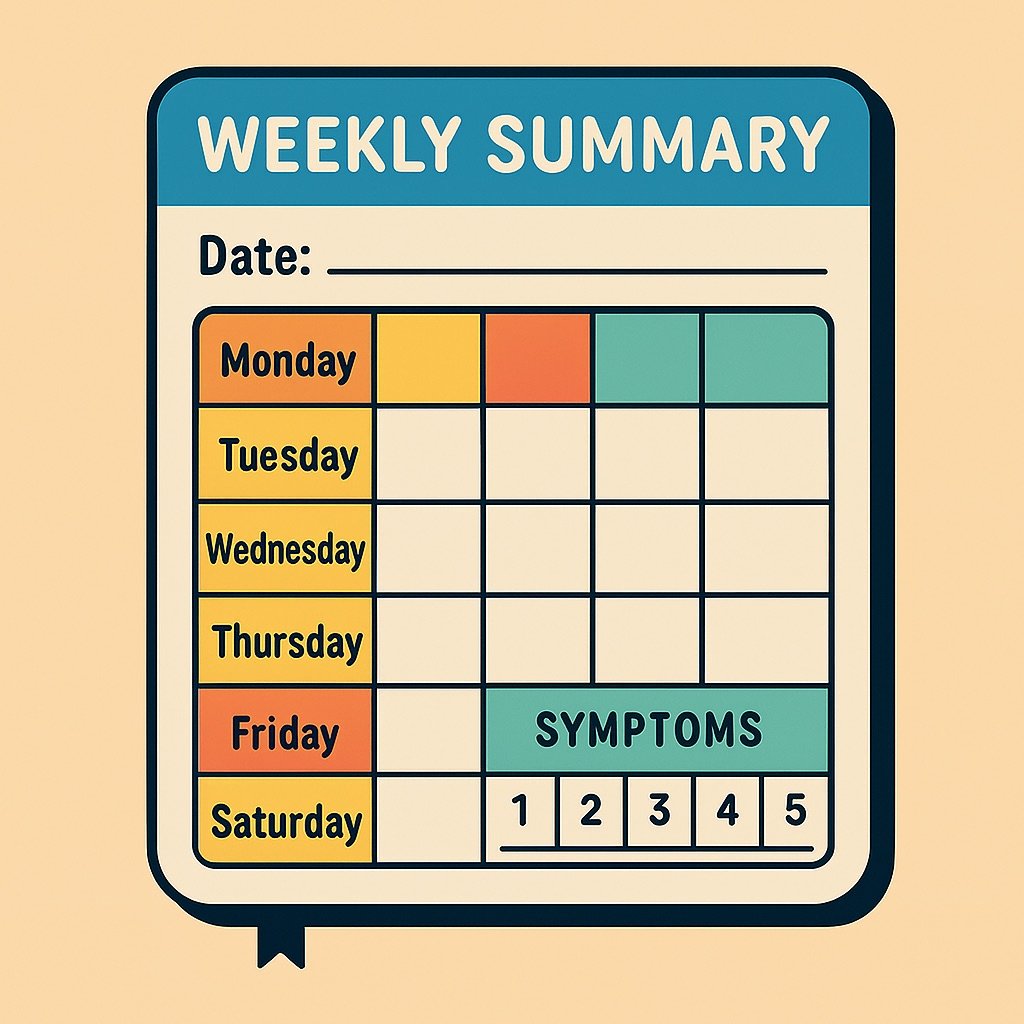
Over time, your journal becomes a map of your body’s rhythms. You may start to notice:
- Certain foods worsen symptoms
- Hydration timing affects stability
- Heat or stress triggers flares
- Mornings are consistently harder
- Rest breaks prevent crashes
- Exercise improves symptoms when paced correctly
These insights help you make informed decisions about your daily routine.

 GnarlyTree | RESEARCH AND NEWS
POTS Research Review | What the Latest Evidence Research Says About POTS Treatments
A summary of recent studies exploring POTS treatments, symptom mechanisms, and emerging approaches in dysautonomia care.
Frequently Asked Questions
How small should a pocket‑sized POTS journal be?
Ideally no bigger than your mobile phone so it’s easy to carry everywhere.
Why use a thin journal instead of a thick one?
Thin journals are more portable and less intimidating, making daily use more sustainable.
Do I need a special pen for my journal?
No—use any pen or pencil you already own; avoid proprietary tools.
How often should I write in my journal?
A few quick notes throughout the day are enough to capture meaningful patterns.
Can I track symptoms digitally instead?
Yes, but many people prefer analog tracking because it reduces screen time and feels more intuitive.
Should I include heart rate numbers?
Only if it helps you; simple notes about how your heart feels are often enough.
How do I store old journals?
Digitize them using your phone’s Scan Documents feature and archive them by month.
What if I forget to write for a day?
Just pick up where you left off—consistency matters more than perfection.
Can this help with doctor appointments?
Yes, a journal provides clear, organized information that helps you communicate patterns and concerns.
Final Thoughts
A pocket‑sized POTS journal is more than a notebook—it’s a daily companion that helps you understand your body, track your symptoms, and build a clearer picture of what supports your stability. By keeping it small, simple, and always within reach, you create a sustainable system that fits naturally into your life. Over time, these tiny entries become powerful insights that help you navigate POTS with more confidence, clarity, and control.
Have you found stress management to be a key part of your POTS care?