A Clear Look at What 2025 Taught Us About POTS Treatment Options
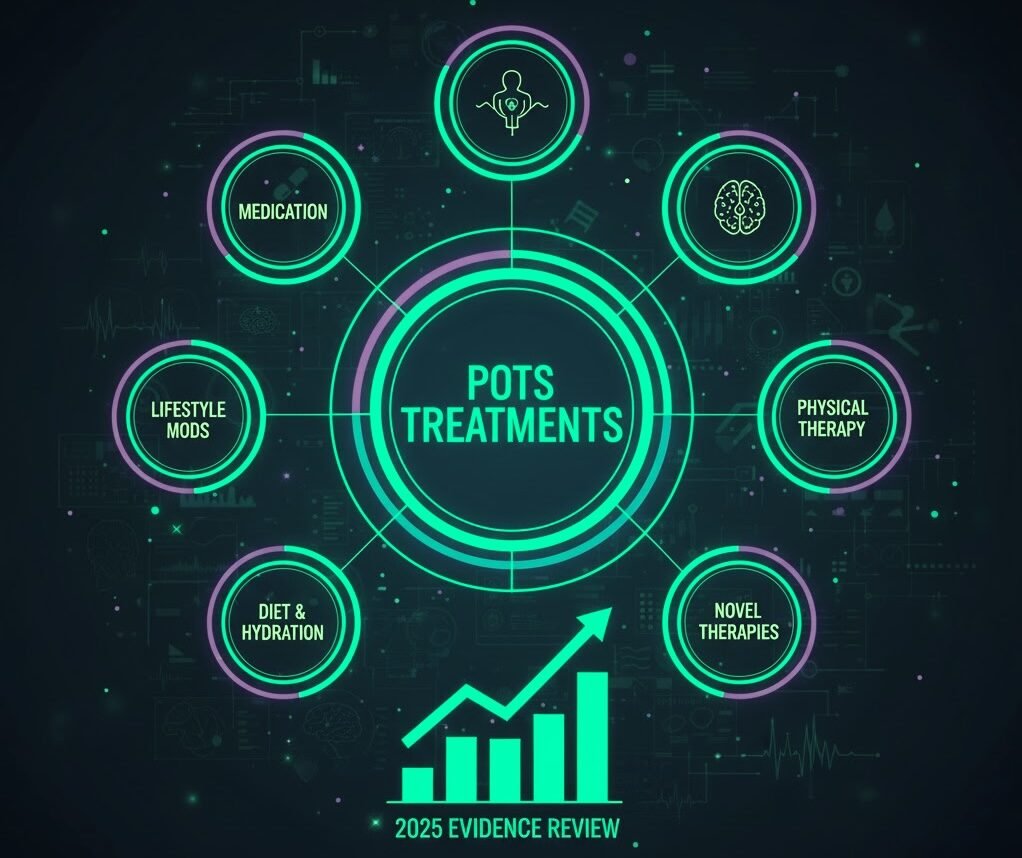
POTS continues to be one of the most complex and misunderstood autonomic disorders, affecting circulation, heart rate regulation, and overall quality of life. In 2025, researchers published new systematic reviews and analyses that help clarify what treatments show promise, where evidence is still weak, and how patients and clinicians can better understand the current landscape of Postural Orthostatic Tachycardia Syndrome (POTS) care.
Why 2025 Was an Important Year for POTS Research
For years, POTS treatment has relied heavily on clinical experience, patient‑reported outcomes, and small studies. In 2025, researchers published systematic reviews that evaluated the strength of existing evidence, examined randomized trials, and assessed the effectiveness of commonly used interventions.
These reviews did not introduce brand‑new treatments, but they did provide something equally valuable: clarity. They helped identify which strategies have the strongest support, which remain uncertain, and where future research should focus.
What is the most helpful non-medical aid you use?
What the 2025 Evidence Reviews Found
The 2025 reviews highlighted several key themes:
- POTS remains a condition with limited high‑quality clinical trials
- Most treatments have weak to moderate evidence, often based on small studies
- Non‑pharmacological strategies continue to be foundational
- Some medications show promise but require more research
- Exercise‑based rehabilitation remains one of the most supported approaches
- There is no single “best” treatment—POTS requires individualized care
These findings reinforce what many patients already know: POTS is complex, and treatment often involves a combination of strategies rather than a single solution.
Understanding the Current Landscape of POTS Treatments
Non‑Pharmacological Strategies: Still the Foundation
Across all 2025 reviews, non‑pharmacological interventions remain the most consistently supported. These include:
- Hydration and electrolyte intake
- Increased sodium intake (when appropriate)
- Compression garments
- Physical reconditioning
- Pacing and energy management
- Heat avoidance
- Sleep optimization
These strategies are not new, but the evidence reviews confirm that they remain essential components of POTS management.
Exercise Training: Strongest Evidence Among All Interventions
Structured exercise programs—especially those beginning with recumbent or semi‑recumbent activities—continue to show the strongest support in research.
Key findings from 2025 reviews include:
- Exercise improves cardiovascular conditioning
- Lower body strength training reduces blood pooling
- Gradual progression increases tolerance to upright positions
- Programs like the CHOP and Levine protocols align with evidence‑based principles
While exercise is not a cure, it remains one of the most effective tools for improving function and reducing symptom severity.
What 2025 Research Says About Medications for POTS
Medication evidence remains limited, but the 2025 reviews help clarify what is known so far.
Medications With Some Supporting Evidence
Several medications show potential benefits in small studies or clinical experience:
- Heart‑rate–lowering medications
- Volume‑expanding agents
- Medications that support vascular tone
- Selective agents that target autonomic regulation
The evidence reviews emphasize that medication responses vary widely and that no drug is universally effective for all POTS patients.
Medications With Weak or Inconsistent Evidence
Some medications commonly used in practice have limited research support. This does not mean they are ineffective—it simply means more studies are needed to understand their role.
Why Medication Evidence Is Limited
The reviews highlight several challenges:
- Small sample sizes
- Lack of long‑term studies
- Variability in POTS subtypes
- Differences in diagnostic criteria
- Limited funding for autonomic research
These limitations underscore the need for more robust clinical trials.
What the 2025 Evidence Reviews Say About POTS Subtypes
POTS is not a single condition—it is a syndrome with multiple underlying mechanisms. The 2025 reviews emphasize that treatment effectiveness may depend on subtype, including:
- Hyperadrenergic patterns
- Hypovolemic tendencies
- Neuropathic involvement
- Post‑viral onset
- Deconditioning‑related symptoms
Understanding subtype patterns may help guide treatment decisions, but more research is needed to define these categories clearly.
Where the Evidence Is Strongest
Across all 2025 reviews, the strongest evidence supports:
- Exercise‑based rehabilitation
- Hydration and electrolyte strategies
- Compression garments
- Lifestyle and pacing strategies
These interventions consistently appear across studies and remain central to POTS management.
Where the Evidence Is Weakest
The weakest evidence exists for:
- Long‑term medication effectiveness
- Treatments targeting specific subtypes
- Novel or experimental therapies
- Interventions with small or inconsistent study results
This does not mean these treatments are ineffective—only that more research is needed.
What 2025 Research Suggests for the Future
The 2025 reviews highlight several priorities for future research:
- Larger randomized controlled trials
- Better definitions of POTS subtypes
- Long‑term outcome studies
- Research into post‑viral autonomic dysfunction
- Studies evaluating combined treatment approaches
These priorities reflect the growing recognition of POTS as a complex, multi‑system condition requiring multidisciplinary research.

 GnarlyTree | DIET AND EATING
POTS and Hydration | Strategies for Optimal Fluid Balance
Dehydration can severely worsen POTS symptoms by reducing blood volume and compromising blood pressure regulation. Here we explore how POTS and Hydration are linked, offering practical hydration strategies, and explanations why staying hydrated is a...
Frequently Asked Questions
What did the 2025 evidence reviews reveal about POTS treatments?
They showed that exercise, hydration, and lifestyle strategies have the strongest support, while medication evidence remains limited.
Are there any new treatments for POTS in 2025?
No new treatments were introduced, but existing treatments were evaluated more thoroughly.
Which treatment has the strongest evidence?
Structured exercise programs continue to have the strongest research support.
Do medications work for POTS?
Some medications may help certain patients, but evidence is limited and responses vary.
Why is POTS research limited?
Small studies, limited funding, and the complexity of POTS contribute to gaps in research.
Did the reviews identify the best treatment for POTS?
No single treatment works for everyone; individualized care remains essential.
Are lifestyle strategies still recommended?
Yes, hydration, electrolytes, compression, and pacing remain foundational.
Do POTS subtypes affect treatment?
Subtypes may influence treatment response, but more research is needed.
What research is needed next?
Larger trials, long‑term studies, and subtype‑specific research are top priorities.
Final Thoughts
The 2025 evidence reviews offer clarity, direction, and renewed focus for the POTS community. While no breakthrough treatments emerged, the year brought a deeper understanding of what works, what needs more study, and how clinicians and patients can navigate the current landscape.
Exercise‑based rehabilitation, hydration strategies, compression, and lifestyle adjustments remain the most supported interventions. Medications may help some individuals, but evidence is still developing.
Most importantly, the 2025 reviews highlight the need for continued research, better funding, and a stronger commitment to understanding the complexities of POTS. As awareness grows, so does the hope for more effective, evidence‑based treatments in the years ahead.
How does your body react to standing still for long periods?